Paper, Plastic, or Composite: What Changes in a Playing Card?
Compare playing card paper, plastic, and composite by flex, feel, and handling resistance so you can choose a material that suits how the deck will be used.
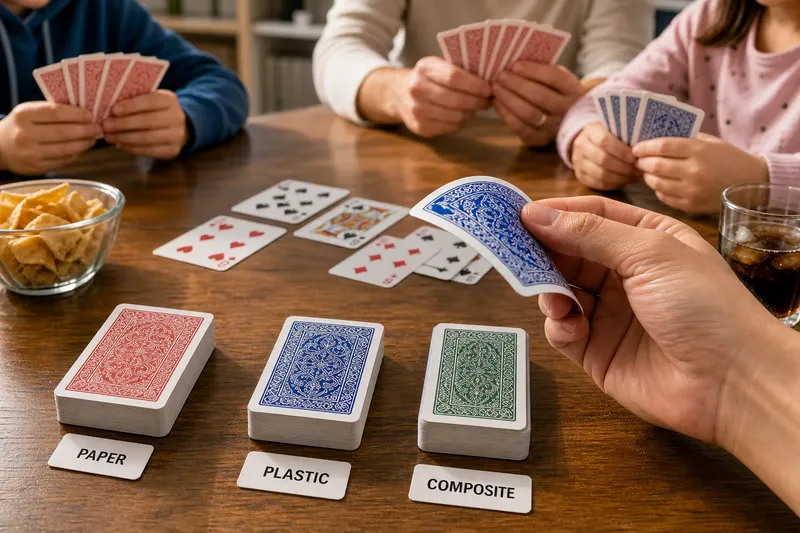
Which playing card material fits your hands, storage habits, and intended setting: paper, plastic, or a composite? The differences are easiest to notice in how playing card stock bends, feels against a fingertip, and responds to repeated handling. A deck’s label and finish matter too, but the base material is a useful place to start.
Choose paper for a familiar, easy-to-replace deck
Paper cards usually consist of paper layers bonded around an opaque center, then coated or finished at the surface. That construction gives the cards a crisp, familiar feel and a clean snap when flexed. The actual stiffness varies with stock, coating, and manufacturing, so “paper” does not describe one exact hand feel.
For casual family play, teaching, or a deck that may be marked up for demonstrations, paper is often the straightforward choice. It is generally easier to find in ordinary stores and simple to replace if a card is bent, lost, or covered in pencil notes. Its surface can also suit people who prefer a less slick grip.
The tradeoff is sensitivity to moisture and surface wear. Damp hands, spills, and repeated rubbing can roughen edges or affect the coating. Paper can also hold a crease once bent sharply; that crease may remain visible and change how the card moves across a table.
Keep a paper deck in its box, away from drinks and humid storage spots. If you want a low-fuss deck for occasional use and do not mind replacing it when it gets tired, paper is a sensible fit.
Choose plastic when repeated handling is the priority
Plastic cards are made primarily from plastic stock, though the exact material and finish vary by product. They often feel smoother and more uniform than paper cards. Their flexibility can make them easier to bend and recover from ordinary handling, while the surface may wipe clean after light smudges.
This makes plastic a practical option for frequent play, shared decks, or settings where cards are handled by many people. A smooth surface can also make cards slide readily across a clean table. That same slickness may be less comfortable if you prefer a dry, textured grip or if cards tend to slip from your fingers.
Plastic is not immune to damage. A hard crease, sharp fold, or rough storage can leave a lasting mark, and surface scratches may become noticeable under bright light. Some plastic cards also feel too flexible or glossy for readers who like the firm snap of paper stock.
If easy surface cleaning and repeated handling matter more than a paper-like feel, look for plastic cards with a finish that suits your grip. Check the manufacturer’s care guidance and any label details, since materials and cleaning limits differ.
Choose composite when you want a middle ground
Composite cards combine paper-based and plastic elements. The construction is not standardized: one product may use a coated paper core, while another may combine layers in a different way. As a result, the word “composite” alone does not tell you precisely how a deck will bend or feel.
Composite stock often aims to balance a paper-like response with more surface protection than an uncoated paper card. It may suit a household that wants a familiar grip but expects more regular handling than an occasional-use deck receives. Some versions feel closer to paper; others feel slicker and more resistant to surface moisture.
Look for the full material description, not just the front-of-package label. If the retailer provides sample cards or a clear description of the finish, use that information to decide whether the surface and stiffness match your preference. When you cannot inspect the deck, choose based on the manufacturer’s stated construction and return policy rather than assuming all composites behave alike.
Match the card material to your situation
- For occasional home use: Choose paper if you value a familiar feel and easy replacement more than resistance to spills or frequent handling.
- For a shared deck: Consider plastic if many hands will handle the cards and a wipeable surface is useful. Check that the slickness feels manageable to the people using it.
- For a tactile, less glossy surface: Start with paper or a composite described as paper-like. Surface finish varies, so confirm the product details where possible.
- For a deck used in a classroom or workshop: Paper is convenient if cards need occasional notes or labels; plastic may suit repeated demonstrations where surface cleaning matters.
- For storage in a humid or spill-prone room: Consider plastic or a suitable composite, and still keep the deck boxed and away from liquids. Material choice does not replace sensible storage.
- For a firm, crisp bend: Paper may be the closest match, but stock thickness and layering also affect stiffness. If that feel matters, inspect a sample before buying.
Say you are choosing a deck for a family game shelf where children will handle it often and drinks sometimes sit nearby. A plastic deck could fit because its surface can be wiped and it tolerates routine handling; storing it in its box would still help limit scratches and lost cards. If the family dislikes a slippery feel, a paper-like composite may be the better compromise.
How do feel, flexibility, and care compare?
Which playing card material feels least slippery?
Paper often feels less slick, though coatings can change that impression. A textured or matte finish may matter as much as the underlying stock, so compare the product surface rather than relying on the material name alone.
Do plastic cards bend differently from paper cards?
Plastic cards commonly flex and recover differently from paper stock, which may retain a sharp crease more readily. The result depends on the card’s thickness, layers, and finish, so there is no single bend behavior for every deck.
Can composite playing cards be cleaned?
Some composite surfaces tolerate light wiping, while others may be affected by moisture or cleaning products. Follow the maker’s care instructions and avoid assuming that “composite” means waterproof or suitable for every cleaner.
What should I inspect before choosing a deck?
Check the material description, surface finish, stiffness, edge construction, and storage recommendation. If you can handle a sample, notice whether it grips, slides, and flexes in a way that feels comfortable to you.
Read the finish and construction, not only the label
Two decks sold as paper can differ in coating and stiffness; two plastic decks can have distinct textures and flexibility. The edge can offer a clue to the layered construction, but appearance alone cannot confirm what is inside. Product descriptions, packaging, and a sample card provide more useful evidence than a broad material category.
Also consider how the cards will be stored. A sturdy box helps protect corners and keeps dust off any surface. Avoid leaving a deck loose in a bag with keys or other hard objects, since scratches and bent corners can occur regardless of stock.
For a considered choice, decide which quality matters most: tactile grip, easy surface cleaning, or a balance between the two. Then compare the stated material and finish, and choose a deck whose handling suits the people and setting. Paper, plastic, and composite each make different compromises; the best fit is the one whose feel and care needs match your routine.